
 0
0O2
Cocoon
Announced
14 June 2007
Weight
114 grams
Features
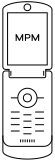
The O2 Cocoon was a clamshell phone made by Korean manufacturer Pantech. It was a 3G-capable phone that used Qualcomm’s BREW uiOne software. It had 2GB of built-in memory plus expandable memory using a microSD card. It was announced to coincide with the launch of The O2 venue in London.
The Cocoon featured a “glow through” LED screen on the front of the phone to display the time, messages, music tracks and other information. It also had a built-in music player with dedicated music buttons on the edge of the device. There was also an integrated FM radio with RDS (radio data system) support.
The product design was developed by Swedish consultancy Syntes Studio who worked with the Streative Branding agency to “develop a design language” for O2 own-branded devices.
 Syntes Studio created the design concept based on research done by O2’s interactive design team that had identified several features were highly attractive to end users: phone capability, a music player and an alarm clock.
At the time, offering an alarm clock was not an obvious key feature, but O2’s research revealed that a significant proportion of users relied on their mobile phone for this function. Elements of the design were optimised to reflect this – notably the docking station (which was referred to as a “nest”) where the phone sat when it was charging. The time was shown on the external display and the user was woken by music stored on the device.
The most striking element of the Cocoon was it's bright white casing as well as its curved design and the integration of the “glow through” LED screen on the front face. The external display differentiated the phone from other products, and although similar concepts had been implemented on devices such as the Sony Ericsson Z610, the integration with applications was particularly clever.
The information presented on the LED display varied depending on the phone function the user had selected. For example, when a new text message arrived the name or number of the sender scrolled across the display followed by the first few words of the message. When listening to music the track name and artist was displayed and other functions such as the volume level was shown when an adjustment was made.
A little known fact about he O2 Cocoon, was that if you took the phone near The O2 the home screen changed image and provided the user withlinks to various guides for The O2 venue.
Syntes Studio created the design concept based on research done by O2’s interactive design team that had identified several features were highly attractive to end users: phone capability, a music player and an alarm clock.
At the time, offering an alarm clock was not an obvious key feature, but O2’s research revealed that a significant proportion of users relied on their mobile phone for this function. Elements of the design were optimised to reflect this – notably the docking station (which was referred to as a “nest”) where the phone sat when it was charging. The time was shown on the external display and the user was woken by music stored on the device.
The most striking element of the Cocoon was it's bright white casing as well as its curved design and the integration of the “glow through” LED screen on the front face. The external display differentiated the phone from other products, and although similar concepts had been implemented on devices such as the Sony Ericsson Z610, the integration with applications was particularly clever.
The information presented on the LED display varied depending on the phone function the user had selected. For example, when a new text message arrived the name or number of the sender scrolled across the display followed by the first few words of the message. When listening to music the track name and artist was displayed and other functions such as the volume level was shown when an adjustment was made.
A little known fact about he O2 Cocoon, was that if you took the phone near The O2 the home screen changed image and provided the user withlinks to various guides for The O2 venue.
Syntes Studio created the design concept based on research done by O2’s interactive design team that had identified several features were highly attractive to end users: phone capability, a music player and an alarm clock.
At the time, offering an alarm clock was not an obvious key feature, but O2’s research revealed that a significant proportion of users relied on their mobile phone for this function. Elements of the design were optimised to reflect this – notably the docking station (which was referred to as a “nest”) where the phone sat when it was charging. The time was shown on the external display and the user was woken by music stored on the device.
The most striking element of the Cocoon was it's bright white casing as well as its curved design and the integration of the “glow through” LED screen on the front face. The external display differentiated the phone from other products, and although similar concepts had been implemented on devices such as the Sony Ericsson Z610, the integration with applications was particularly clever.
The information presented on the LED display varied depending on the phone function the user had selected. For example, when a new text message arrived the name or number of the sender scrolled across the display followed by the first few words of the message. When listening to music the track name and artist was displayed and other functions such as the volume level was shown when an adjustment was made.
A little known fact about he O2 Cocoon, was that if you took the phone near The O2 the home screen changed image and provided the user withlinks to various guides for The O2 venue.